.png)

A Safari Cannot Be Improvised. It Must Be Composed.
In Africa, coherence matters more than accumulation.
In Africa, coherence matters more than accumulation.
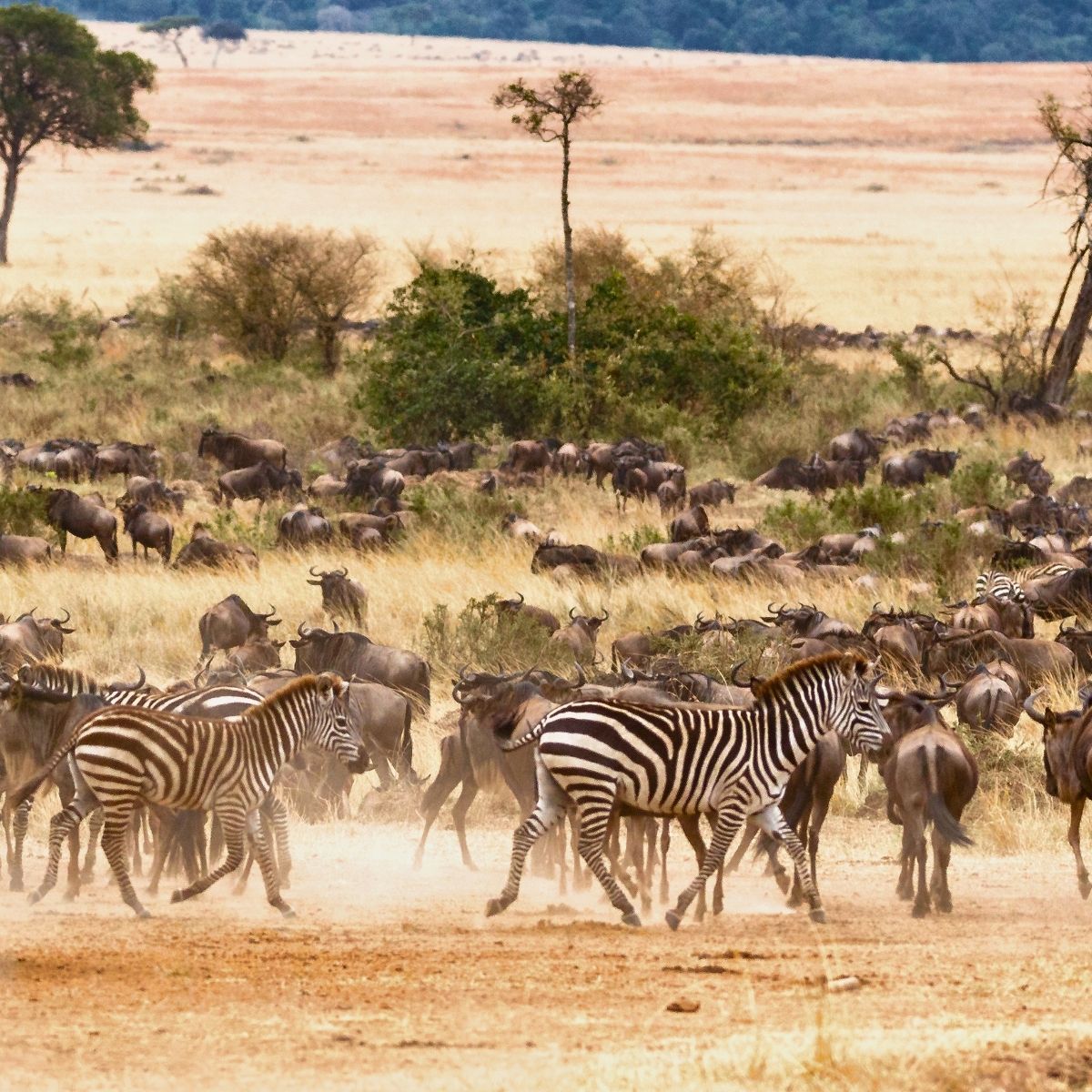
In Africa, a safari is often imagined as something almost obvious. You choose a country, a few well-known lodges, a recommended season, and assume that the magic will follow. The images are everywhere, the promises as well. Vast landscapes, wildlife encounters, golden light, a sense of escape. Everything seems accessible, almost simple.
And yet, a safari is never just an accumulation of places.
Those who have spent time on the continent know this well: Africa does not reveal itself to those who rush through it. It opens up to those who accept its complexity, its rhythms, its silences. An itinerary can be spectacular and still feel unbalanced. It can be luxurious and still feel misaligned. The difference does not lie only in the level of lodges or the size of the budget. It lies in coherence.
This coherence is not something you see on a website. It is something you feel once you are there. It emerges from the way landscapes respond to one another, from how distances unfold, from how transfers preserve your energy rather than exhaust it. It depends on choosing one concession over another, on understanding the actual season rather than the so-called “ideal” one, on deciding how much presence you are willing to share with others.
A poorly designed safari can become a succession of images. You tick off iconic names, move from camp to camp, cover ground too quickly. The experience is impressive, but fragmented. By contrast, a safari composed with care creates an invisible continuity. It allows space. It gives time. It lets the traveler inhabit places rather than pass through them.
Designing such a journey requires more than knowing destinations. It requires understanding nuance. Knowing that a particular reserve has become more crowded in recent years. That a region can transform completely depending on rainfall. That an iconic lodge may not suit every traveler. That some legendary areas have lost their silence, while others, more discreet, still preserve a rare sense of intimacy.
It also requires understanding the traveler. A safari is never neutral. It reveals expectations that are often unspoken. Some seek intensity, others contemplation. Some embrace long, dusty drives, others need a sense of continuity and comfort. Some want to see as much as possible, others want to feel more deeply.
The most common mistake is to think of a safari as a product. It is not. It is a sensitive construction, almost artisanal. Like a composition, it requires balance between moments of intensity and moments of stillness, between rarity and continuity, between movement and pause.
Today, Africa is more sought after than ever. Addresses circulate quickly, experiences sometimes become standardized. And yet, the continent remains demanding. Political dynamics evolve, ecosystems are fragile, tourism flows shift. Designing a relevant itinerary requires an up-to-date, independent understanding, free from trends and assumptions.
Perhaps this is what defines contemporary luxury: not trying to see as much as possible, but choosing what feels right. Fewer places, better connected. Depth over accumulation. Accepting that a meaningful journey begins long before departure, in an honest conversation about expectations, rhythm, real budget and appropriate timing.
A successful safari is not defined by a single wildlife encounter. It rests on an invisible architecture that supports the experience without ever imposing itself. When this structure is right, the journey feels fluid. It feels natural. And it is precisely because it has been carefully composed.
We are currently accompanying a limited number of safari projects for 2026 and 2027. Each season, we intentionally choose to work on a small number of itineraries in order to preserve this level of attention, coherence and precision.
If Africa is part of your thinking, for yourself or for those close to you, it deserves to be approached with clarity and intention.
A great safari is never improvised. It is composed.
We support travelers in reflecting on and designing safari experiences that are coherent, meaningful and aligned with the realities of the field.

.png)